
|
| HOME | CINEMA | GREEK CINEMA | FILMS - MOVIES | DIRECTORS | ACTORS | NEWS |
|
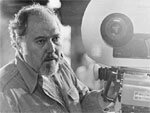
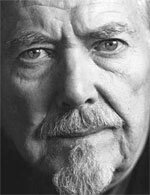
Robert Altman A GREAT STORYTELLER HAS LEFT US Something like an obituary for Robert Altman As of Monday, 20th November 2006, the great filmmaker Robert Altman is no longer with us. One of the most important directors of our times leaves behind a poorer filmmaking community. He was an American, born on 20th February 1925, in Kansas, USA. He first began directing in 1951 with his film “Modern football” and since then made more than 87 films, for both television and cinema. His rich and interesting filmography includes the masterpieces: “M*A*S*H*” (1970), “Nashville” (1975), “Short Cuts” (1993), “The Player” (1992), “Gosford Park” (2001), but also his less popular films, still extremely interesting and artistically astounding: “Three Women” (1977), “McCabe & Mrs. Miller” (1971), “Vincent and Theo” (1990), “The Long Goodbye” (1973) and many more. His latest film was the much praised “A prairie home companion” (2006), which ironically, according to Robert Altman, was a film about death. He also worked as producer for more than 38 films, as a scriptwriter in 38 films, as an editor in 4 films, and also as an actor in 3 films. He also was the founder of “Lions Gate” Films, which he lost after a tough period he was going through. Altman might have been an American but in the end, if we judge from his film aesthetics, he was a European. His films resembled more European filmmaking rather than the typical American movies, because in a very simple way he described and structured his characters using a slow-paced film style when needed, to build robust characters in order for the audience to handle his complicated, numerous, multilayered narratives and stories. Quite often he used famous and talented actors and placed them in a harmoniously choreographed ensemble that no one else could master so good. For example in his film Nashville he had 24 characters, equally sharing screen time and forming a complete, fully comprehendible multilayered story. His characters in his films are not accidental rudiments of the narrative, but true people, extensions of authentic personas and situations of our society. We are not trying to imply that Altman was a realist filmmaker. Many times his narrative and storytelling approached a lyrical pragmatism infected by arbitrary elements, making his film language resemble with that of poetic realism. He indirectly criticized the society, always in profound and brutal way, he always was up to date and insightful towards the essence of the social situations he lived with. The filter of Altman allowed only the essential to go through, which he then processed and ultimately resulted in a fictional narration and an analysis of the political, social and economic situation of the current society. In order to make things more clear, we will look at Altman’s film “The Player” (1992), dealing with the high society of his time, the celebrities and the intrigues that challenge the relationships and friendships of the people in show business. We witness a harsh and direct criticism towards Hollywood, its internal mechanism and the people that control and are controlled by the phony, glamorous world of Hollywood. As well, in his more recent film, “Gosford Park” (2001) he will also criticize the elite of society, the aristocracy, by brilliantly juxtaposing the world of the rich (upstairs people, the aristocrats) with the world of the poor (downstairs people, the servants), but also explore the interpenetrations between these two social layers. In 1996 he made a film about the mafia and jazz in his own birth town, Kansas, called “Kansas City”, while in 1993 he makes a great film, “Short cuts”, which according to Altman it was about the Los Angeles society and ketchup! The narrative in this film is in a spiraling mode, describing stories of social situations in a very short way, which in the end all link together and become a great big story that could be considered as “The Story”, a universal narrative that describes society in a worldwide level. The brilliant film by Altman, “M*A*S*H*” (1970) will remain unforgettable, for its unique humor, and the successfully aimed criticism towards the Vietnam War, released during a time when still the remnants of that war tortured the American society. He was a great director, an excellent storyteller, a humorist, and someone who with his sudden death will leave a big emptiness in the world of cinema. I do not know what the reaction to his death was in America but without a doubt the reaction in Europe was enormous and tough to deal with. By Giannis Frangoulis Translated by Konstantinos Vassilaros ROBERT ALTMAN |
|
Welcome to www.cinemainfo.gr a website dedicated to the art of cinema. Everything about cinema. A creation of www.internetinfo.gr
INTERNETINFO © ΚΙΝΗΜΑΤΟΓΡΑΦΟΣ INFO.GR