 |
| HOME | CINEMA | GREEK CINEMA | FILMS - MOVIES | DIRECTORS | ACTORS | NEWS |
|
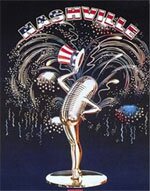
ROBERT ALTMAN’S “NASHVILLE” (1975) Robert Altman’s “Nashville” (1975) is about events taking place during a five day country and western musical festival in Nashville, Tennessee during the summer of 1976. The film follows 24 individuals throughout that festival. Nashville is the home of the Grand Ole Opry, the epicentre of American country-western music, were musicians, producers, promoters and people from all over the country come together to celebrate the western American music. “Nashville” is not one long story; it’s an interweaving of many shorter stories about people. The film observes how these people, living in a very conservative and surreal society, interact with each other. It follows the lives of diverse people who are forced to coexist in the town of Nashville. In a more insightful look on the film, it is a two and half hour study of American culture, show business, leadership and politics. All the characters are brought together into a random fashion, either for the music festival or the political rally that takes place during the event. All the characters express their hopes, intentions, dreams, and frustrated lives in this lonely society. All these characters are consisted of the residents of Nashville, civic leaders, politicians and their front men, music stars and their managers, wannabe stars, reporters, fans, drifters and misfits. This entire cast of characters move through various places, events and festivals, including the airport, recording studios, motel rooms, hospitals, nightclubs and concert halls. All individuals have come to this town for different reasons. Robert Altman states that ‘Nashville, the town was the Hollywood microcosm of its time and the film is a culture panorama with a reflective American sensibility and politics.’ “Nashville” has two major backdrops: the first is the city and its rich musical legacy and the second is one of America’s most favourite ‘game’, politics. The film takes place in the days preceding the Tennessee presidential primary. A nonconformist candidate, Hal Philip Walker of the Replacement Party, has taken hold of the city. He stands for everything rejected by the major parties, for example changing the National Anthem and removing all ‘dirty’ lawyers from the Congress. This is in a post Vietnam War, John F. Kennedy assassination and Watergate scandal era, were the American Politics and Society face a major crisis and doubt. This political rally somehow invades the whole film and during, constantly, vans with loudspeakers, banners and stickers, people supporting Walker appear on screen. “Nashville’s” ideal spectator has to be naïve, vulnerable and observant, a participant observer. Robert Altman’s unique directing style enhances the sense of realism in the film and allows the audience to follow the complicated plot of 24 different characters. Creating the sense of realism is essential to the audience since it elucidates the messages and ideas about American society. Helen Keyssar in the book “Robert Altman’s America” (1991) says: ‘Robert Altman recognizes that we [the Americans] enjoy our despair in who we are. Altman’s films describe a culture and its inhabitants stuck like a top in the mud and prevented from sinking only by the force of its self-perpetuated spinning’. The viewers of the film “Nashville” are exposed to scenes that include corruption in American politics and show-business, racism, sexism, and extreme violence. Most films in Hollywood ‘are easy to forget’ and as well as their messages. On the contrary, “Nashville” and all of Altman’s films are not easy to forget, precisely because they renegotiate the Americans’ detachments and attachments to American culture. All these themes are portrayed in a very realistic and documentary-like way; this reinforces the sense of truthfulness. Altman’s strongest point of the film is that show-business people and politicians are indistinguishable from each other. Altman shows the problems of America, its heroes and its villains. He tries to warn and alert the people of America that something has gone wrong along the way. Through his masterpiece, viewers are carried in a journey of music and politics, and of people’s stories. It glorifies and disparages America. In times of troubles and wars he tries to show in what state American society is and where it’s heading too. The ending montage of arbitrary people of Nashville singing along with the new star Albuquerque the song “It don’t worry me” allows the viewer to link the words of the song with the people singing it. Parents, young kids, teenagers, old people are singing along. The song never actually ends, but the sound fades out and the camera pans to the sky in an indication of reflection and continuance of the situation. “Nashville” is nothing more than a political campaign with an entertainment value. All the themes that are explored in the film, portrayed in the unique fashion and structure of Robert Altman’s directorial signature are simply life itself. As Altman says in one of his interviews it is just a way of melding a whole view, his view, of that political climate in America of 1975. Instant success, violence, women in despair, war, loneliness. As a conclusion for what the film truly asks from the viewer I quote Gibley from his book “It don’t worry me”: ‘The movie’s yours: free your mind; renounce your Old Hollywood ways’. By Konstantinos Vassilaros ROBERT ALTMAN’S “NASHVILLE” (1975) |
|

Welcome to www.cinemainfo.gr a website dedicated to the art of cinema. Everything about cinema. A creation of www.internetinfo.gr
INTERNETINFO © ΚΙΝΗΜΑΤΟΓΡΑΦΟΣ INFO.GR